A Unique Experience in Malta – Assessing Young Athletes in Triathlon and Cycling

I had the honor and responsibility to participate as an external expert in the practical evaluations conducted by Malta’s National Sports School, assessing students aged 11 to 12 in the sports of Triathlon and Cycling. This experience was truly unique, both from a pedagogical and coaching perspective.

During the assessments, we evaluated the students’ abilities through structured tests in swimming, cycling, running, and general movement skills. The aim was to identify young talent and lay the foundations for their future athletic development based on international standards.

This opportunity allowed me to apply my knowledge in a meaningful way, while also exchanging ideas and experiences with fellow professionals from abroad. The event was exceptionally well-organized, and the collaboration with officials from Malta’s Ministry of Education was exemplary.

I had the chance to work alongside esteemed colleagues, to gain firsthand insight into Malta’s model of sports development, and to evaluate enthusiastic and talented young athletes. Experiences like this reaffirm the value of knowledge exchange and highlight the importance of international cooperation in sport.

Participating in such international initiatives is not only a personal honor but also an acknowledgment of the value of a scientific and educational approach to sport—especially when it comes to nurturing the next generation of athletes.

I would like to extend my sincere thanks to the Ministry of Education of Malta for their invitation and hospitality, as well as to the Cyprus Olympic Committee for their trust and support. Representing Cyprus in an international educational and athletic setting is both a great honor and a meaningful responsibility.

What qualifications does one need to be an endurance sports coach (and not only) in Cyprus?

Unfortunately, absolutely nothing.

Anyone, but anyone, can wake up one morning and decide to start declaring themselves as a coach of endurance roads, cycling, triathlon, etc.

Of course, a good presence on social media helps, as does having been an athlete in a sport, regardless of level or length of stay in it.

Also helpful are some coaching seminars, lasting from a few hours - days to a few weeks, behind which someone can "cover" themselves in some way and freely declare that they are now a coach.

And somewhere back in the qualifications, there can be talk of a University degree in Physical Education - Coaching, but by God, it is not necessary!

Before I am accused of being biased, as a graduate of Athens University in Physical Education, let me mention that I also hold the World Triathlon Level 2 coaching diploma, as well as the UCI (International Cycling Union) Level 1 coaching diploma, so I can compare (although there should be no reason to compare) the difference between them.

These purchased certifications, (because they are certifications) from whatever organization they come from, do provide some frameworks and guidelines, but they do not in any way replace the depth of knowledge and critical skills that a university degree offers.

 Here’s why true coaching requires a deeper educational foundation:

1. Understanding Human Physiology and Biomechanics
A coaching certificate might cover the basics of training principles, but a university degree in sports science, kinesiology, or exercise physiology delves much deeper into how the human body functions. Understanding physiological responses to training, recovery mechanisms, and injury prevention is crucial for developing effective, safe, and individualized training plans. Without this foundation, a coach may rely too heavily on generalized templates rather than scientific principles.
2. Psychology and Athlete Development
Coaching isn’t just about prescribing workouts; it’s about understanding athlete behavior, motivation, and mental resilience. A university degree often includes coursework in sports psychology, which helps coaches develop strategies for improving mental toughness, overcoming performance anxiety, and fostering long-term athlete development. A coaching certificate, on the other hand, may only scratch the surface of these concepts.
3. Evidence-Based Coaching vs. Practical Application
One major shortcoming of certificate programs is that they often prioritize practical application over scientific inquiry. A university education teaches critical thinking, research skills, and the ability to analyze peer-reviewed studies. This allows coaches to adapt their methodologies based on the latest evidence rather than relying solely on traditional or anecdotal approaches. Without this ability, coaches risk using outdated or ineffective training methods.
4. Individualization and Complex Case Management
Triathlon coaching is not a one-size-fits-all endeavor. Athletes come with varying levels of fitness, medical histories, and personal constraints. A coach with a university background has the depth of knowledge to understand complex cases, such as those involving metabolic conditions, cardiovascular concerns, or biomechanical limitations. A certification program, by contrast, may not prepare coaches to handle these intricacies.
5. Ethical and Professional Responsibilities
A university education instills a sense of professional responsibility and ethics that goes beyond the scope of a coaching certificate. This includes understanding doping regulations, long-term athlete welfare, and the broader impact of training decisions on an athlete’s career and health. Coaches with a higher education background are also more likely to engage in continued professional development and lifelong learning.

Conclusion: Certification vs. Education
While a Level 2 certification from World Triathlon provides a valuable starting point, it does not, on its own, make someone a complete coach. True coaching excellence requires a deeper understanding of physiology, psychology, and evidence-based methodologies—something that a university degree offers. For those serious about making a lasting impact on their athletes, investing in higher education is not just an option; it’s a necessity.

Christos Christou MA, Bsc Physical Education
Triathlon Coach Cyprus
 

Video: Cycling in group

Check this amazing video, from the 5th stage of tour d Swiss, taken from a bike camera during the last sprint:

Photos and results of Cyprus Triathlon Championship 2014

Here are some photos from our resent Triathlon Olympic Distance race.

For the results you can click here

P1010550 P1010557 P1010586 P1010595 P1010570 10422487_10152046931666612_3877535393693036910_n andreas despina4 despina 3 despina 2 despina 1 Giannis Aouat skettos 2 skettos 4 entrance start 1 skettos 3

How running made us human

Public release date 17-Nov-2004

Contact: Dennis Bramble, professor of biology
bramble@bioscience.utah.edu 
801-581-3549 (office)
University of Utah

Lee Siegel, science news specialist
leesiegel@ucomm.utah.edu
801-581-8993 (office) / 801-244-5399 (cellular)
University of Utah Public Relations

To contact Dan Lieberman, call Steve Bradt
steve_bradt@harvard.edu
617-496-8070
Harvard University Communications

 University of Utah

Endurance running let us evolve to look the way we do

Humans evolved from ape-like ancestors because they needed to run long distances – perhaps to hunt animals or scavenge carcasses on Africa’s vast savannah – and the ability to run shaped our anatomy, making us look like we do today.

That is the conclusion of a study published in the Nov. 18 issue of the journal Nature by University of Utah biologist Dennis Bramble and Harvard University anthropologist Daniel Lieberman. The study is featured on Nature’s cover.

Bramble and Lieberman argue that our genus, Homo, evolved from more ape-like human ancestors, Australopithecus, 2 million or more years ago because natural selection favored the survival of australopithecines that could run and, over time, favored the perpetuation of human anatomical features that made long-distance running possible.

“We are very confident that strong selection for running – which came at the expense of the historical ability to live in trees – was instrumental in the origin of the modern human body form,” says Bramble, a professor of biology. “Running has substantially shaped human evolution. Running made us human – at least in an anatomical sense. We think running is one of the most transforming events in human history. We are arguing the emergence of humans is tied to the evolution of running.”

That conclusion is contrary to the conventional theory that running simply was a byproduct of the human ability to walk. Bipedalism – the ability to walk upright on two legs – evolved in the ape-like Australopithecus at least 4.5 million years ago while they also retained the ability to travel through the trees. Yet Homo with its “radically transformed body” did not evolve for another 3 million or more years – Homo habilis, Homo erectus and, finally, our species, Homo sapiens – so the ability to walk cannot explain anatomy of the modern human body, Bramble says.

“There were 2.5 million to 3 million years of bipedal walking [by australopithecines] without ever looking like a human, so is walking going to be what suddenly transforms the hominid body?” he asks. “We’re saying, no, walking won’t do that, but running will.”

Walking cannot explain most of the changes in body form that distinguish Homo from Australopithecus, which – when compared with Homo – had short legs, long forearms, high permanently “shrugged” shoulders, ankles that were not visibly apparent and more muscles connecting the shoulders to the head and neck, Bramble says. If natural selection had not favored running, “we would still look a lot like apes,” he adds.

I Run, Therefore I Am

Bramble and Lieberman examined 26 traits of the human body – many also seen in fossils of Homo erectus and some in Homo habilis – that enhanced the ability to run. Only some of them were needed for walking. Traits that aided running include leg and foot tendons and ligaments that act like springs, foot and toe structure that allows efficient use of the feet to push off, shoulders that rotate independently of the head and neck to allow better balance, and skeletal and muscle features that make the human body stronger, more stable and able to run more efficiently without overheating.

“We explain the simultaneous emergence of a whole bunch of anatomical features, literally from head to toe,” Bramble says. “We have a hypothesis that gives a functional explanation for how these features are linked to the unique mechanical demands of running, how they work together and why they emerged at the same time.”

Humans are poor sprinters compared with other running animals, which is partly why many scientists have dismissed running as a factor in human evolution. Human endurance running ability has been inadequately appreciated because of a failure to recognize that “high speed is not always important,” Bramble says. “What is important is combining reasonable speed with exceptional endurance.”

Another reason is that “scientists are in developed societies that are highly dependent on technology and artificial means of transport,” he adds. “But if those scientists had been embedded in a hunter-gatherer society, they’d have a different view of human locomotor abilities, including running.”

Why Did Humans Start Running?

The researchers do not know why natural selection favored human ancestors who could run long distances. For one possibility, they cite previous research by University of Utah biologist David Carrier, who hypothesized that endurance running evolved in human ancestors so they could pursue predators long before the development of bows, arrows, nets and spear-throwers reduced the need to run long distances.

Another possibility is that early humans and their immediate ancestors ran to scavenge carcasses of dead animals – maybe so they could beat hyenas or other scavengers to dinner, or maybe to “get to the leftovers soon enough,” Bramble says.

Scavenging “is a more reliable source of food” than hunting, he adds. “If you are out in the African savannah and see a column of vultures on the horizon, the chance of there being a fresh carcass underneath the vultures is about 100 percent. If you are going to hunt down something in the heat, that’s a lot more work and the payoffs are less reliable” because the animal you are hunting often is “faster than you are.”

Anatomical Features that Help Humans Run

Here are anatomical characteristics that are unique to humans and that play a role in helping people run, according to the study:


  • Skull features that help prevent overheating during running. As sweat evaporates from the scalp, forehead and face, the evaporation cools blood draining from the head. Veins carrying that cooled blood pass near the carotid arteries, thus helping cool blood flowing through the carotids to the brain.


  • A more balanced head with a flatter face, smaller teeth and short snout, compared with australopithecines. That “shifts the center of mass back so it’s easier to balance your head when you are bobbing up and down running,” Bramble says.


  • A ligament that runs from the back of the skull and neck down to the thoracic vertebrae, and acts as a shock absorber and helps the arms and shoulders counterbalance the head during running.


  • Unlike apes and australopithecines, the shoulders in early humans were “decoupled” from the head and neck, allowing the body to rotate while the head aims forward during running.


  • The tall human body – with a narrow trunk, waist and pelvis – creates more skin surface for our size, permitting greater cooling during running. It also lets the upper and lower body move independently, “which allows you to use your upper body to counteract the twisting forces from your swinging legs,” Bramble says.


  • Shorter forearms in humans make it easier for the upper body to counterbalance the lower body during running. They also reduce the amount of muscle power needed to keep the arms flexed when running.


  • Human vertebrae and disks are larger in diameter relative to body mass than are those in apes or australopithecines. “This is related to shock absorption,” says Bramble. “It allows the back to take bigger loads when human runners hit the ground.”


  • The connection between the pelvis and spine is stronger and larger relative to body size in humans than in their ancestors, providing more stability and shock absorption during running.


  • Human buttocks “are huge,” says Bramble. “Have you ever looked at an ape? They have no buns.” He says human buttocks “are muscles critical for stabilization in running” because they connect the femur – the large bone in each upper leg – to the trunk. Because people lean forward at the hip during running, the buttocks “keep you from pitching over on your nose each time a foot hits the ground.”


  • Long legs, which chimps and australopithecines lack, let humans to take huge strides when running, Bramble says. So do ligaments and tendons – including the long Achilles tendon – which act like springs that store and release mechanical energy during running. The tendons and ligaments also mean human lower legs that are less muscular and lighter, requiring less energy to move them during running.


  • Larger surface areas in the hip, knee and ankle joints, for improved shock absorption during running by spreading out the forces.


  • The arrangement of bones in the human foot creates a stable or stiff arch that makes the whole foot more rigid, so the human runner can push off the ground more efficiently and utilize ligaments on the bottom of the feet as springs.


  • Humans also evolved with an enlarged heel bone for better shock absorption, as well as shorter toes and a big toe that is fully drawn in toward the other toes for better pushing off during running.


The study by Bramble and Lieberman concludes: “Today, endurance running is primarily a form of exercise and recreation, but its roots may be as ancient as the origin of the human genus, and its demands a major contributing factor to the human body form.”

University of Utah Public Relations

201 S Presidents Circle, Room 308
Salt Lake City, Utah 84112-9017
(801) 581-6773 fax: 585-3350
www.utah.edu/unewsfunny-monkey-1

Stunning Swimming Sculpture is Carved From a Single Piece of Wood

t may be hard to believe, but this stunning sculpture was carved from a single piece of wood. Artist Stefanie Rocknak, who you may remember as the creator of that ghostly Edgar Allan Poe sculpture, is behind this fascinating figurative work. Slightly larger than life-size, the sculpture, called The Swimmer, was part of a three piece commission under the project The Triathlete. The other two pieces are called The Biker and The Runner. Each of them show a sense of movement. As Rocknak tells us, “These days, I am not very interested in sculpted figures, or real people, that ‘strike a pose.’ I am much more intrigued by folks who are on their way to or from somewhere. They seem more genuine to me.”

Love how Rocknak captures the moment in time when a swimmer comes up for a breath. Notice the incredible details like the splashes of water and the lines on the hand.

From Stefanie Rocknak’s website

woodsculpture01woodsculpture02woodsculpture05

Cycling: Video from our training

Alexandros brought his camera during our Sunday ride:

Chronic Exercise Preserves Lean Muscle Mass in Masters Athletes

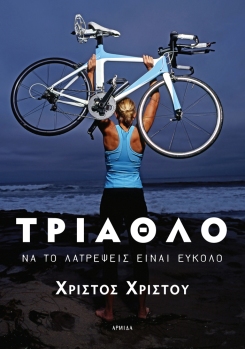
A  study called, “Chronic Exercise Preserves Lean Muscle Mass in Masters Athletes,” which you can read HERE graphically illustrates what happens to your muscles (with and without) the type of regular and beneficial exercise that the sport of triathlon provides. The image above  is a cross section of a 40-year-old triathlete’s legs and the associated muscle. But the  other two images are the really interesting and telling ones. As you can tell, the 74-year-old masters triathlete’s legs are not unlike that of the 40-year-old triathlete’s legs. The study’s authors go on to write: “It is commonly believed that with aging comes an inevitable decline from vitality to frailty. This includes feeling weak and often the loss of independence. These declines may have more to do with lifestyle choices, including sedentary living and poor nutrition, than the absolute potential of musculoskeletal aging. In this study, we sought to eliminate the confounding variables of sedentary living and muscle disuse, and answer the question of what really happens to our muscles as we age if we are chronically active. This study and those discussed here show that we are capable of preserving both muscle mass and strength with lifelong physical activity.” They conclude by writing: “The loss of lean muscle mass and the resulting subjective and objective weakness experienced with sedentary aging imposes significant but modifiable personal, societal, and economic burdens. As sports medicine clinicians, we must encourage people to become or remain active at all ages. This study, and those reviewed here, document the possibility to maintain muscle mass and strength across the ages via simple lifestyle changes.” 40 yo triathlete   I am referring to that study in the book i wrote: Triathlon, Loving it is easy

Giro 2014 Stage 1 TTT Team Garmin Dan Martin CRASH!

It had seemed April was the cruellest month for Daniel Martin but May held an even more vicious twist. Twelve days after the Irish rider lost victory in the Liège-Bastogne-Liège Classic with a crash on the final corner, his assault on the Giro d’Italia ended on Friday night before it had properly begun, when a pile-up in the team time trial on the streets of Belfast put him out with a broken collarbone. “So sad. Nothing to be done. Professional bike racing is cruel,” was the immediate verdict of his team manager, Jonathan Vaughters.

The crash came as his Garmin-Sharp team approached the final technical part of the course; in the slippery conditions caused by intermittent showers one of their number appeared to lose control of his front wheel on a manhole cover. Three more piled into the first faller and each other, sliding and rolling down the tarmac.

Nathan Haas, André Cardoso and Koldo Fernández picked themselves up in dribs and drabs but their team leader, Martin, was left sitting in the left-hand gutter clutching his right arm, a classic symptom of a broken collarbone. The team later said Fernández had suffered the same injury even though he finished.

The four who stayed upright had to slow down considerably to regroup into a pack of five — the time on the finish line being taken on the fifth man — waiting for Fabian Wegmann who had not fallen but had been tailed off, and the delay meant that they rode in last, 3min 25sec behind the stage winners, the Australian squad Orica-GreenEdge. It was a multiple whammy, because not only was Martin out and three others injured, but the upshot was a massive time loss for the team’s co-leader Ryder Hesjedal, the 2012 winner. “It was a nightmare,” said Hesjedal, who was in front of the pile-up. “It was pretty scary because you don’t know what’s going on.”

Orica had started as the overwhelming favourites for this stage, having won the equivalent leg in last year’s Tour de France and their Canadian, Svein Tuft, who finished last in the 2013 Tour de France, was permitted to be the first rider across the line in Donegall Square on his 37th birthday. He will wear the first pink leader’s jersey of the race for Saturday’s 219km stage out of Belfast and back via the Antrim coast road, Bushmills and Ballymena. “They gave me the gift, it was a birthday present,” he said. “This is a once-in-a-lifetime opportunity for a guy like me.”

With Orica lacking a serious contender for the overall standings, the two favourites who took most from this 22km opening stage were Rigoberto Uran of Colombia and Cadel Evans of Australia, last year’s second and third finishers. Only two seconds separated Uran’s Omega-Pharma Quickstep and Evans’s BMC but both gained time on the two strongest climbers, Nairo Quintana of Colombia and Joaquim Rodríguez of Spain. Quintana’s Movistar ended up eighth, 55sec behind Orica, losing 50sec and 48sec to Uran and Evans, while Rodríguez’s Katyusha squad dropped a further 28sec in a lowly 19th place. These are relatively small margins given the climbing yet to come but momentum matters, and for the moment it is on the side of Evans and Uran.

This was a deceptively hard test, sufficiently long that it needed to be taken seriously and with a strong breeze blowing from the very beginning, where the riders set off down the start ramp in front of the 126ft-high silver aluminium shard-clad walls of the Titanic centre, with the colossal yellow cranes of the Harland and Wolff shipyard to one side, and the river Lagan to the other. The crowds on the 21.7km course were immense, particularly on the lengthy section out and home down the Newtonards road, and up the short climb to the first time check after 7.9km, outside the Stormont assembly building.

Given the windy conditions, it was no surprise to see teams losing riders as early as the opening few minutes on the climb to Stormont. There were nervous mutterings and glances at the lowering skies throughout the evening, because a sudden downpour would mean that tyre pressures would have to be rapidly lowered. Shortly after the fifth of the 22 teams, Katyusha, set off, the breeze began swirling, the temperature dropped and the heavens opened, making every corner and white line on the road a potential pitfall.

To add to the difficulty, on the sequence of bends between the Ormeau Road and Stranmills Road, the crowds spilling on to the tarmac created a narrow corridor for the riders and made the corners and traffic islands nightmarish to read.

The conditions improved slightly for the later finishers, which worked in favour of Team Sky, who eventually placed fifth, Evans’s BMC and Uran’s Omega-Pharma Quickstep. For Martin, however, it was game over on day one.

Pictures from our Triathlon Test

P1010426P1010494P1010489P1010487P1010424P1010415P1010413P1010426P1010489P1010430P1010431P1010432P1010433P1010434P1010435Testing the route for our next triathlon race.4.5(43)4.5(42)4.5(41)4.5(40)4.5(39)4.5(38)4.5(29)4.5(31)4.5(32)4.5(25)4.5(22)4.5(21)4.5(18)4.5(17)4.5(15)4.5(13)4.5(14)4.5(10)4.5(3)4,5(16)4.5.(2)P1010413

Create your own website, free on WordPress.com.Create your own website.
Start free